Field guide

South Sudan,
in brief.

Why this country, why these children, and why education is the piece that compounds. Four things to know — and one decision at the end of it.

01
An impoverished nation

Independent since 2011.

South Sudan broke away from Sudan in 2011 — the world's newest country. Population is around 12 million; the majority are Christian. Most villages don't have electricity, running water, or paved roads.

02
Years of conflict

Africa's largest refugee crisis.

Civil war and ethnic violence have driven powerful groups to fight for control of the country and its resources — from oil to grazing land. Nearly 4 million people have been forced to flee their homes. It's the largest refugee crisis on the continent and a full humanitarian emergency.

03
Limited resources

Crowded camps, no schools.

Exiled South Sudanese families have sought peace in refugee camps inside and outside the country's borders. Conditions are crowded, resources are short, and there's almost no formal education available for the children who land there.

04
Children in need

A generation without classrooms.

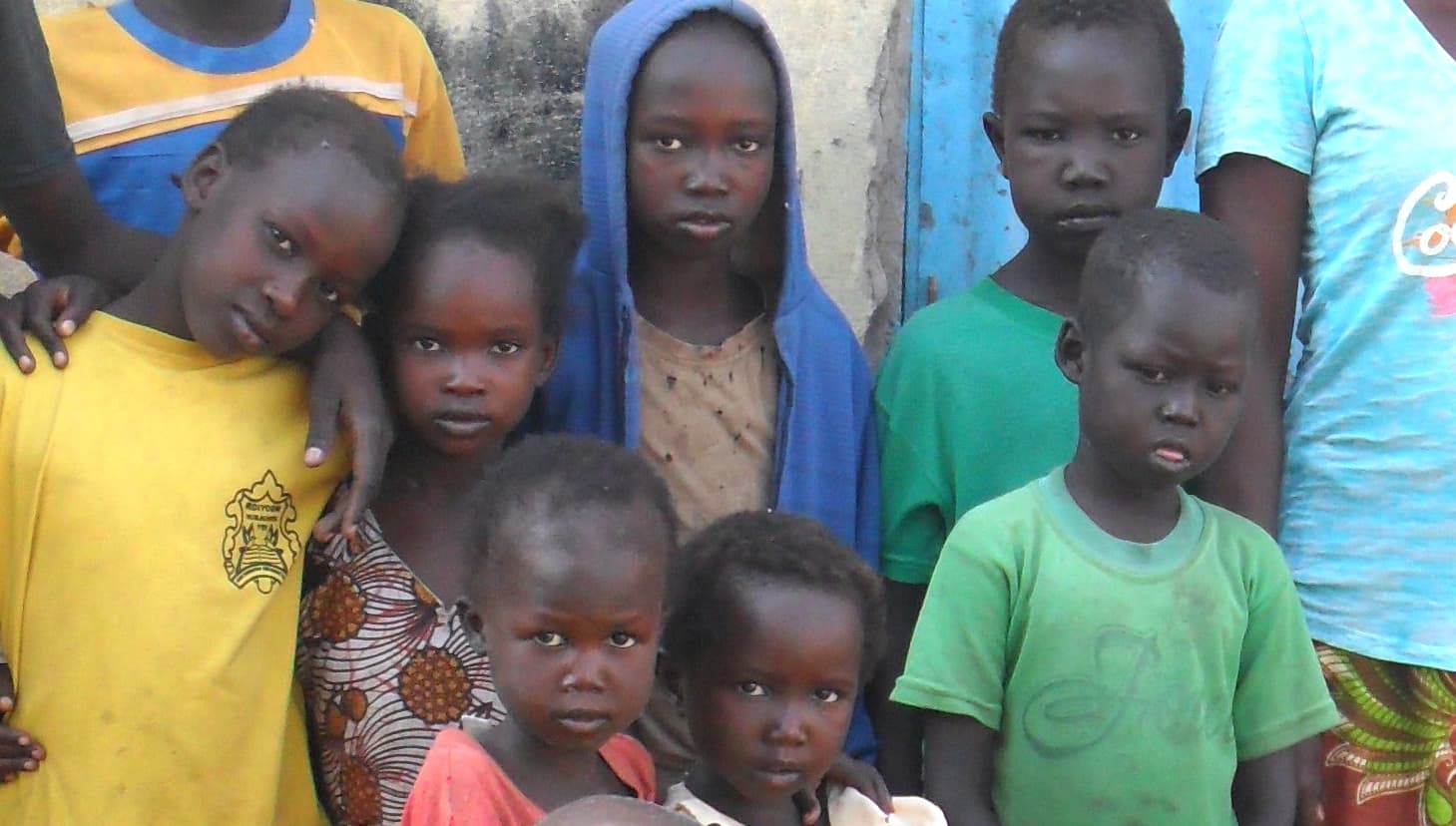
The kids in these camps — many of whom have lost their parents — have little to no access to school. Donations are what put them in a classroom. We can't end a war. We can keep one kid in school for another year.

Where the kids end up

Refugee camps in Uganda.

Many South Sudanese families flee south to Uganda, where the UNHCR runs some of the largest refugee settlements in the world. Conditions are crowded; schools are oversubscribed; resources are stretched thin.

That's why four of our six partner schools are in Uganda — serving the displaced South Sudanese families who landed there and the local Ugandan communities that took them in.

One classroom at
a time.

We can't end a war. We can keep one kid in school for one more year. Stack enough of those years together and a country changes.